
Lupus (SLE): An Integrative and Functional Medicine Approach
Medically reviewed by Dr Krushal Pabari, MD, PGCP - Rheumatic & Musculoskeletal Diseases · Last reviewed: 4 November 2026
Key facts
Systemic lupus erythematosus (SLE, or lupus) is a long-term autoimmune condition that can affect the skin, joints, kidneys, blood and other organs. It affects about 3.4 million people worldwide, mostly women [1]. Low vitamin D is common in lupus, and trials of vitamin D supplements suggest it may help lower disease activity [2][3]. We combine functional medicine and functional nutrition with monitored vitamin D where tests show a need and magnesium assessed from the overall clinical picture, in coordination with your existing consulting physician, with regular monitoring.

Scientific explainer videos in our Resources section
In our Resources section, our clinical team discusses lupus (SLE) and its management in detail: functional nutrition, regular blood tests and supervised vitamin D therapy (Coimbra Protocol), alongside guideline medicines.
What is lupus (SLE)? Symptoms and types
In lupus, the immune system makes antibodies against the body’s own tissues, causing inflammation that can involve the joints, skin, kidneys, heart, lungs, blood vessels and brain. It is about 9 times more common in women than men [1] and often starts between ages 15 and 45.
Common symptoms:
- A butterfly-shaped rash across the cheeks and nose (malar rash)
- Joint and muscle pain, especially in the hands and wrists
- Tiredness and low-grade fever
- Sensitivity to sunlight
- Kidney or nervous-system symptoms in some people
Lupus can affect mainly the skin (cutaneous lupus) or the whole body (SLE). Blood tests such as ANA, anti-dsDNA and complement levels help confirm the diagnosis.
Vitamin D and lupus: what the research shows
- Low vitamin D is common in lupus, and lower levels are linked with more disease activity and kidney involvement [4].
- Supplements: promising but mixed. In a 2026 analysis of 10 randomized trials (847 patients), vitamin D reduced lupus disease activity and improved complement levels [2]. An earlier analysis of 5 trials found less fatigue but no clear change in disease activity [3]. Larger trials are still needed.
- People with lupus often need vitamin D monitoring anyway, because they avoid the sun and many take steroids, which thin bones; lupus guidelines include bone protection [5].
Does lupus affect the heart? Heart disease, blood pressure and blood sugar
Yes. Lupus (systemic lupus erythematosus, SLE) raises cardiovascular risk. According to a 2023 analysis of 46 studies in the journal Lupus, people with lupus have about 2.5 times the risk of stroke, about 3 times the risk of heart attack and about 2.7 times the risk of high blood pressure of people without lupus; diabetes was only slightly and not significantly more common [17]. In line with this, the 2022 EULAR recommendations advise regular checks of heart risk factors for everyone with lupus [18].
- Metabolic syndrome is common: metabolic syndrome is a cluster of high blood pressure, high blood sugar, high triglycerides, low HDL (“good”) cholesterol and a large waist. A 2026 analysis of studies worldwide found it in about 27% of people with lupus, with the same figure for Asia [19]. In these studies, people taking hydroxychloroquine had about one third lower odds of having it, while cyclophosphamide, azathioprine and mycophenolate were linked with a higher risk and steroids showed no clear link [19].
- Lower vitamin D went with metabolic changes: in an international study of 1,163 people recently diagnosed with lupus, in 33 centres across 11 countries, those with lower vitamin D levels were more likely to have metabolic syndrome and insulin resistance, along with high blood pressure, high triglycerides and low HDL cholesterol [20]. The study measured everyone once, so it shows a link, not that low vitamin D causes these changes; its authors suggest further studies could test whether correcting vitamin D helps [20].
- Steroids and blood sugar: in the same study, more steroid (glucocorticoid) exposure went with more insulin resistance [20], and lupus guidelines separately advise keeping steroids as low and as short as possible [5].
- What the guidelines advise: the 2022 EULAR recommendations advise regular screening and management of blood pressure, cholesterol and other heart risk factors. They also suggest a blood pressure target below 130/80 mmHg, cholesterol care as for the general population, the lowest steroid dose that controls lupus, and hydroxychloroquine, which may also lower heart risk [18].
At Cure4Pain, heart and metabolic checks are part of lupus follow-up: blood pressure, weight and waist, fasting glucose, HbA1c and fasting insulin, a lipid profile (cholesterol, HDL, LDL and triglycerides) and kidney tests, alongside vitamin D, with findings shared with your existing consulting physician.
Magnesium and lupus
Magnesium is needed to activate vitamin D and for normal muscle and nerve function [7], and people with lupus often ask which form to take. We assess magnesium from the overall clinical picture because, according to the US National Institutes of Health, less than 1% of the body’s magnesium is in the blood, and blood levels do not accurately reflect total body magnesium [21]; we then choose the form and dose with you. Our full article explains the research and the different forms: Magnesium deficiency and autoimmune diseases.
Supplements for lupus: what may help and what to avoid
- May help, under supervision: vitamin D (with monitoring), magnesium, omega-3 and other nutrients that your tests or overall clinical picture show are low.
- Best avoided unless your doctor advises otherwise: herbs marketed for “immune boosting”. A 2025 review found 15 herbs with the strongest evidence of stimulating the immune system in ways that could flare autoimmune skin disease, including alfalfa, ashwagandha, astragalus, chlorella, echinacea, garlic supplements, ginseng, green tea extract, noni (Indian mulberry), liquorice, mistletoe, reishi mushroom, skullcap, spirulina and giloy (tinospora) [6].
- Tell your existing consulting physician about every supplement you take.
What is the conventional treatment for lupus? Medicines as per guidelines
According to the 2023 EULAR recommendations, everyone with lupus should take hydroxychloroquine unless it is unsuitable for them, with steroids kept as low and as short as possible and other immune medicines started early when needed [5]. The 2025 American College of Rheumatology (ACR) guideline, for adults and children, agrees [8].
- Treatment goal: EULAR advises aiming for remission, or low disease activity if remission is not possible [5]. Here remission is a defined measure (DORIS 2021): no clinical signs of activity on a standard score, with lupus medicines continued and at most a low steroid dose [11]; it does not mean lupus has gone away.
- Hydroxychloroquine: the ACR suggests continuing it long term, even when lupus is quiet [8]. A 2020 joint statement of the ACR and the American Academy of Ophthalmology advises a baseline eye test, then yearly screening starting no later than 5 years after starting it [12]; the Academy advises looking beyond the central retina in Asian patients [13].
- Steroids (glucocorticoids): EULAR describes them as a short “bridge” during flares, then reduced and stopped when possible [5]; the ACR strongly recommends tapering to a low maintenance dose within 6 months [8].
- Steroid-sparing immune medicines: methotrexate, azathioprine or mycophenolate, when hydroxychloroquine is not enough or steroids cannot be reduced [5].
- Biological medicines: belimumab or anifrolumab for activity that continues despite these medicines [5].
- Severe or refractory disease: intravenous cyclophosphamide for organ-threatening or life-threatening lupus, and rituximab in refractory cases [5].
- Lupus nephritis (kidney involvement): steroids plus mycophenolate or low-dose intravenous cyclophosphamide, often combined with belimumab or a calcineurin inhibitor (voclosporin or tacrolimus) [5][10]. Treatment continues for years: EULAR advises at least 3 years after the kidneys respond, KDIGO 2024 sets 36 months in total for proliferative nephritis, and the 2024 ACR guideline advises 3 to 5 years [5][10][9].
- Prevention: EULAR lists sun protection (the ACR also stresses sunscreen), stopping smoking, a balanced diet, regular exercise and bone health [5][8]. EULAR also recommends vaccines against shingles (herpes zoster), HPV, influenza, COVID-19 and pneumococcus, plus kidney protection, heart and blood vessel risk checks and cancer screening [5].
- Pregnancy: the 2020 ACR guideline advises planning pregnancy for a time when lupus is quiet and medicines are pregnancy-compatible [14]. EULAR recommends hydroxychloroquine before conception and throughout pregnancy, and avoiding mycophenolate, methotrexate and cyclophosphamide in pregnancy [15]. A 2026 Asia-Pacific (APLAR) consensus, led by rheumatologists from India, also covers medicine safety in pregnancy and breastfeeding [16].
At Cure4Pain, Dr Krushal Pabari prescribes and adjusts these medicines as per guidelines, under clinical guidance from Team Cure4Pain, in coordination with your existing consulting physician and with a kidney specialist (nephrologist) where the kidneys are involved, alongside supervised vitamin D therapy and the integrative plan; never stop or change them on your own.
Our integrative approach
- Vitamin D balance: many people with lupus have low vitamin D and variations in the vitamin D receptor gene. The dose is set individually and adjusted using PTH, calcium monitoring and how you respond.
- Cofactor support: magnesium, vitamin K2, riboflavin (B2), selenium, zinc, B12 and omega-3.
- Gut and nutrition support: gut lining support, identifying food sensitivities, checking for infections where relevant, hydration and a calcium-restricted diet during the protocol.
- Functional testing: thyroid function, iron, hormones, and conditions such as hypothyroidism, PCOS or IBS that can affect how you feel.
- Monitoring: vitamin D (25-OH D), PTH, ionised calcium, liver and kidney function, ESR and CRP, with changes based on symptoms and organ involvement.
One of the therapies we use is the Coimbra Protocol (supervised vitamin D therapy): read how it works, who it may suit and how it is monitored.
What to expect
Lupus changes slowly and differently in each person. Skin and joint symptoms may respond sooner; kidney and nervous-system involvement are treated as per guidelines by Dr Krushal Pabari, with a kidney specialist (nephrologist) or neurologist where needed, in coordination with your existing consulting physician. We review your symptoms and tests at each follow-up and share findings with your existing consulting physician. Individual results vary.
De-identified patient cases
Educational case examples, shared with patient consent. Results vary and are not typical. Doses were set and monitored by the clinic for each patient and are not shown.
Case 1: Lupus with psoriasis, Hashimoto’s and Sjögren’s (multi-autoimmune overlap)

Read the details of case 1
Start date: March 1, 2023
Initial presentation:
- Severe weight loss, weakness, psoriatic lesions, dryness, gut issues
- Labs: ESR 52, Vit D 28, B12 127, PTH 160, Ionised Ca 0.92
Support initiated:
- Vitamin D: supervised vitamin D therapy (Coimbra Protocol); the dose was set and adjusted by the clinic using blood tests
- Cofactors: magnesium, B complex, a mineral blend, liver and gut support, omega-3
- Nutrition: calcium-restricted diet and gut health plan
Follow-up progress:
| Timeline | Clinical progress | Labs |
|---|---|---|
| Day 25 | The patient reported less skin involvement, better joint comfort and better digestion. | – |
| Month 4 | The patient reported improvement in symptoms, mobility and energy. | ESR 19, Vit D 120, B12 643, PTH 56, Ca 1.01 |
| Adjustment: the vitamin D dose was lowered; cofactors continued. | ||
Photos shared with patient consent. Not typical.
Individual results vary; further studies are needed. Do not change any medicine without medical guidance.
Case 2: Lupus with facial and scalp rashes, on long-term steroids

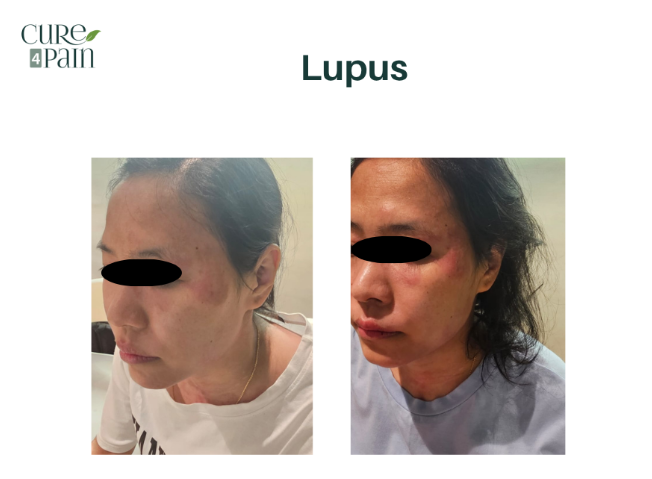
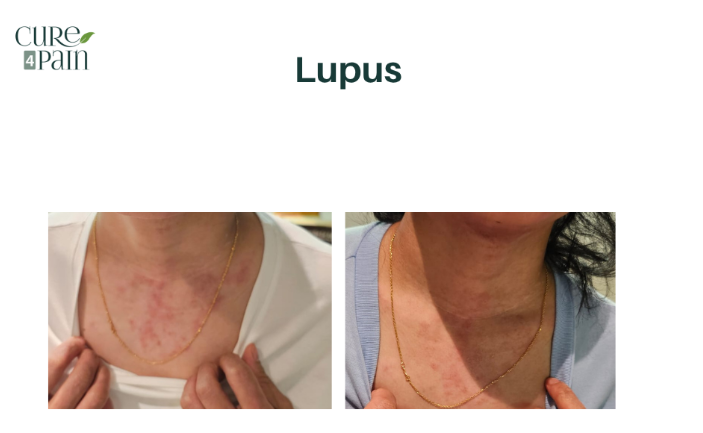

Read the details of case 2
Start date: December 2024
Initial presentation:
- 6 years on methylprednisolone with ongoing flares
- Rashes on face, scalp, neck; fatigue, joint pain
- Labs: ESR 37, RA Factor 84, Vit D 3, B12 541, Ionised Ca 1.11
Support initiated:
- Vitamin D: supervised vitamin D therapy (Coimbra Protocol); the dose was set and adjusted by the clinic using blood tests
- Cofactors: magnesium, B complex, a mineral blend, liver support, immune support
- Gut health plan: targeted antimicrobial and cleansing support
Follow-up progress:
| Timeline | Clinical progress | Labs |
|---|---|---|
| Day 25 | The patient reported fewer skin lesions, less joint pain, and better sleep and energy. | – |
| Month 2 | Further improvement reported; the steroid dose was reviewed under clinical guidance from Team Cure4Pain, in coordination with the existing consulting physician. | – |
| Month 6 | The patient reported managing daily activities; kidney function tests stayed within the laboratory range. | ESR 9, Vit D 136, PTH 82, Ca 1.03, B12 694, eGFR 113, Creatinine 0.86 |
Photos shared with patient consent. Not typical.
Individual results vary; further studies are needed. Do not change any medicine without medical guidance.
In both cases, changes to steroids and other medicines were made only under clinical guidance from Team Cure4Pain, in coordination with the existing consulting physician, and kidney function stayed stable in the tests shown.
Evidence: key studies
| Study | What it found |
|---|---|
| Tian et al., Ann Rheum Dis 2023 [1] | About 3.4 million people worldwide have SLE; far more women than men. |
| Lu et al., Autoimmun Rev 2026 [2] | 10 trials: vitamin D reduced lupus disease activity and improved complement. |
| Zheng et al., Am J Med Sci 2019 [3] | 5 trials: less fatigue, no clear change in disease activity. |
| Fanouriakis et al., Ann Rheum Dis 2024 [5] | EULAR 2023 guideline: hydroxychloroquine for all; minimise steroids. |
| Weiner et al., Lupus Sci Med 2025 [6] | 15 “immune-boosting” herbs that may flare autoimmune skin disease. |
| Bello et al., Lupus 2023 [17] | 46 studies: about 2.5 times the stroke risk, 3 times the heart attack risk and 2.7 times the high blood pressure risk; diabetes not significantly raised. |
| Samethadka Nayak et al., Lupus 2026 [19] | Metabolic syndrome in about 27% of people with lupus; lower odds with hydroxychloroquine. |
| Chew et al., Rheumatology 2021 [20] | 1,163 people with newly diagnosed lupus, 11 countries: lower vitamin D linked with metabolic syndrome and insulin resistance (measured once, so a link, not a cause). |
Lupus FAQs
Can vitamin D help lupus?
Possibly. In the largest recent analysis of trials, vitamin D supplements reduced lupus disease activity [2], although an earlier analysis found a benefit mainly for fatigue [3]. We use vitamin D with monitoring, in coordination with your existing consulting physician.
Which magnesium is best for lupus?
It depends on why you need it, your digestion and your kidney function. We assess magnesium from the overall clinical picture and choose with you. Our magnesium article compares the common forms.
What supplements should people with lupus avoid?
Herbs sold for “immune boosting” may flare autoimmune disease, including alfalfa, ashwagandha, echinacea, spirulina, giloy and others [6]. Check every supplement with your existing consulting physician.
Can I take vitamin D with hydroxychloroquine or steroids?
Yes, vitamin D is commonly used alongside both. Steroids can thin the bones, so lupus guidelines include protecting bone health [5]. We plan doses around your medicines and share them with your existing consulting physician.
How are the kidneys monitored in lupus?
Lupus can affect the kidneys (lupus nephritis), so the 2023 EULAR recommendations advise regular screening for kidney involvement [5]; we check urine protein, creatinine and blood pressure at follow-ups. On a vitamin D protocol we also check calcium and kidney function. People with significant kidney involvement need a plan agreed with a kidney specialist (nephrologist); higher-dose vitamin D therapy may not be suitable.
Can lupus cause high blood sugar or insulin resistance?
Metabolic syndrome, which includes high blood sugar, affects about 1 in 4 people with lupus (SLE) [19], although a 2023 analysis did not find diabetes itself clearly more common than in people without lupus [17]. In an international study of people recently diagnosed with lupus, insulin resistance was more common with lower vitamin D and with more steroid exposure [20]. Guidelines advise regular checks of heart risk factors in lupus [18], so blood pressure, blood sugar and cholesterol are worth checking at follow-ups.
Will I still need my lupus medicines?
Yes. Lupus needs specialist care and the medicines recommended in guidelines. At Cure4Pain, Dr Krushal Pabari prescribes and adjusts them as per guidelines, in coordination with your existing consulting physician; the integrative plan is added to them, never in place of them.
How much does a consultation cost?
The consultation fee is shown when you book. Blood tests can be done at a laboratory near you. Supplements can be bought from a source of your choice, as long as the quality and dose are approved during your consultation; typical monthly costs are discussed in your first consultation.
Can I consult online from outside India?
Yes. We see patients worldwide online, with blood tests done near you.
Who treats you
- Dr Krushal PabariMD, PGCP - Rheumatic & Musculoskeletal Diseases. Assistant Professor, Cooper Hospital; Guest Professor, CMP Homoeopathic Medical College.
- AT. Chintan Dalal, N.D.BNYS, R.AP. Functional nutrition and Coimbra Protocol practitioner.
How consultations work: Mumbai or online worldwide
Book through our patient portal. You can see us in person at our clinic in Malad West, Mumbai, or online from anywhere. Your first consultation reviews your history and tests; we then agree a plan together and set the monitoring schedule.
Related conditions and articles
- Rheumatoid ArthritisJoint pain and stiffness; integrative care in coordination with your existing consulting physician.
- PsoriasisScaly, inflamed skin patches; vitamin D, nutrition and patient cases.
- Hashimoto's ThyroiditisAutoimmune thyroid; antibodies, vitamin D, selenium and thyroid care.
- Chronic Urticaria (Hives)Long-lasting hives; finding triggers and supporting the immune system.
- Magnesium and autoimmune disease
- Sjögren’s syndrome
- Vitamin D and autoimmune disease: what the research shows
This page is for education and does not replace medical advice. Do not start, stop or change any medicine or supplement without medical guidance.
References
1. Tian J, et al. Global epidemiology of systemic lupus erythematosus: a comprehensive systematic analysis and modelling study. Ann Rheum Dis 2023;82(3):351-356. doi:10.1136/ard-2022-223035
2. Lu J, et al. Effects of vitamin D supplementation on patients with systemic lupus erythematosus: a systematic review and meta-analysis. Autoimmun Rev 2026;25(5):104057. doi:10.1016/j.autrev.2026.104057
3. Zheng R, et al. Efficacy and safety of vitamin D supplementation in patients with systemic lupus erythematosus: a meta-analysis of randomized controlled trials. Am J Med Sci 2019;358(2):104-114. doi:10.1016/j.amjms.2019.04.020
4. Athanassiou L, et al. Vitamin D and autoimmune rheumatic diseases. Biomolecules 2023;13(4):709. doi:10.3390/biom13040709
5. Fanouriakis A, et al. EULAR recommendations for the management of systemic lupus erythematosus: 2023 update. Ann Rheum Dis 2024;83(1):15-29. doi:10.1136/ard-2023-224762
6. Weiner JD, et al. Identifying immunostimulatory herbal supplements that may flare autoimmune skin diseases: a systematic scoping review. Lupus Sci Med 2025;12(2):e001803. doi:10.1136/lupus-2025-001803
7. Uwitonze AM, Razzaque MS. Role of magnesium in vitamin D activation and function. J Am Osteopath Assoc 2018;118(3):181-189. doi:10.7556/jaoa.2018.037
8. Sammaritano LR, et al. 2025 American College of Rheumatology (ACR) guideline for the treatment of systemic lupus erythematosus. Arthritis Rheumatol 2026;78(7):1361-1386. doi:10.1002/art.43452
9. Sammaritano LR, et al. 2024 American College of Rheumatology (ACR) guideline for the screening, treatment, and management of lupus nephritis. Arthritis Rheumatol 2025;77(9):1115-1135. doi:10.1002/art.43212
10. KDIGO Lupus Nephritis Work Group. KDIGO 2024 clinical practice guideline for the management of lupus nephritis. Kidney Int 2024;105(1S):S1-S69. doi:10.1016/j.kint.2023.09.002
11. van Vollenhoven RF, et al. 2021 DORIS definition of remission in SLE: final recommendations from an international task force. Lupus Sci Med 2021;8(1):e000538. doi:10.1136/lupus-2021-000538
12. Rosenbaum JT, et al. American College of Rheumatology, American Academy of Dermatology, Rheumatologic Dermatology Society, and American Academy of Ophthalmology 2020 joint statement on hydroxychloroquine use with respect to retinal toxicity. Arthritis Rheumatol 2021;73(6):908-911. doi:10.1002/art.41683
13. Marmor MF, et al. Recommendations on screening for chloroquine and hydroxychloroquine retinopathy (2016 revision). Ophthalmology 2016;123(6):1386-1394. doi:10.1016/j.ophtha.2016.01.058
14. Sammaritano LR, et al. 2020 American College of Rheumatology guideline for the management of reproductive health in rheumatic and musculoskeletal diseases. Arthritis Rheumatol 2020;72(4):529-556. doi:10.1002/art.41191
15. Andreoli L, et al. EULAR recommendations for women’s health and the management of family planning, assisted reproduction, pregnancy and menopause in patients with systemic lupus erythematosus and/or antiphospholipid syndrome. Ann Rheum Dis 2017;76(3):476-485. doi:10.1136/annrheumdis-2016-209770
16. Ravindran V, et al. The Asia Pacific League of Associations for Rheumatology (APLAR) consensus statements for the management of reproductive issues in autoimmune rheumatic diseases. Int J Rheum Dis 2026;29(7):e70751. doi:10.1111/1756-185x.70751
17. Bello N, et al. Cardiovascular events and risk in patients with systemic lupus erythematosus: systematic literature review and meta-analysis. Lupus 2023;32(3):325-341. doi:10.1177/09612033221147471
18. Drosos GC, et al. EULAR recommendations for cardiovascular risk management in rheumatic and musculoskeletal diseases, including systemic lupus erythematosus and antiphospholipid syndrome. Ann Rheum Dis 2022;81(6):768-779. doi:10.1136/annrheumdis-2021-221733
19. Samethadka Nayak S, et al. Global prevalence and associated factors of metabolic syndrome in patients with systemic lupus erythematosus: a systematic review and meta-analysis. Lupus 2026;35(13):1354-1381. doi:10.1177/09612033261477274
20. Chew C, et al. Lower vitamin D is associated with metabolic syndrome and insulin resistance in systemic lupus: data from an international inception cohort. Rheumatology (Oxford) 2021;60(10):4737-4747. doi:10.1093/rheumatology/keab090
21. Office of Dietary Supplements, US National Institutes of Health. Magnesium: Fact Sheet for Health Professionals. ods.od.nih.gov/factsheets/Magnesium-HealthProfessional