Written by AT. Chintan Dalal, N.D. · Reviewed by Dr Krushal Pabari, Clinical Team, Cure4Pain · Updated 30 October 2026
Key facts
Insulin resistance is a key feature of PCOS (polycystic ovary syndrome, renamed polyendocrine metabolic ovarian syndrome, or PMOS, in 2026), according to the 2023 International Evidence-based PCOS Guideline [1] [2]. In a 2016 meta-analysis of 28 clamp studies, the reference test for insulin sensitivity, sensitivity was 27% lower in women with PCOS than in controls, independent of BMI [3]. Reported rates depend on the test: 64% of 271 patients on HOMA-IR in a 2005 study [4], and 75% of lean and 95% of overweight women in a small 2013 clamp study [5]. The guideline does not advise insulin tests in routine care, names the oral glucose tolerance test as the most accurate check of blood sugar, and finds no evidence that any one diet composition is better than another [1]. In a 2023 meta-analysis of randomised trials, metformin lowered HOMA-IR modestly [6], and a 2024 review for the guideline called the evidence for inositol “limited and inconclusive” [7].

Scientific explainer videos in our Resources section
In our Resources section, our clinical team discusses vitamin D, its cofactors and how autoimmune, lifestyle and pain conditions develop.
How are PCOS and insulin resistance linked?
Insulin resistance is part of how PCOS works. The 2023 International Evidence-based PCOS Guideline calls it “a pathophysiological factor in PCOS” and “a key feature” of the condition [1]. Insulin resistance means that cells in your muscles, fat and liver do not respond well to insulin, according to the US National Institute of Diabetes and Digestive and Kidney Diseases (NIDDK) [8].
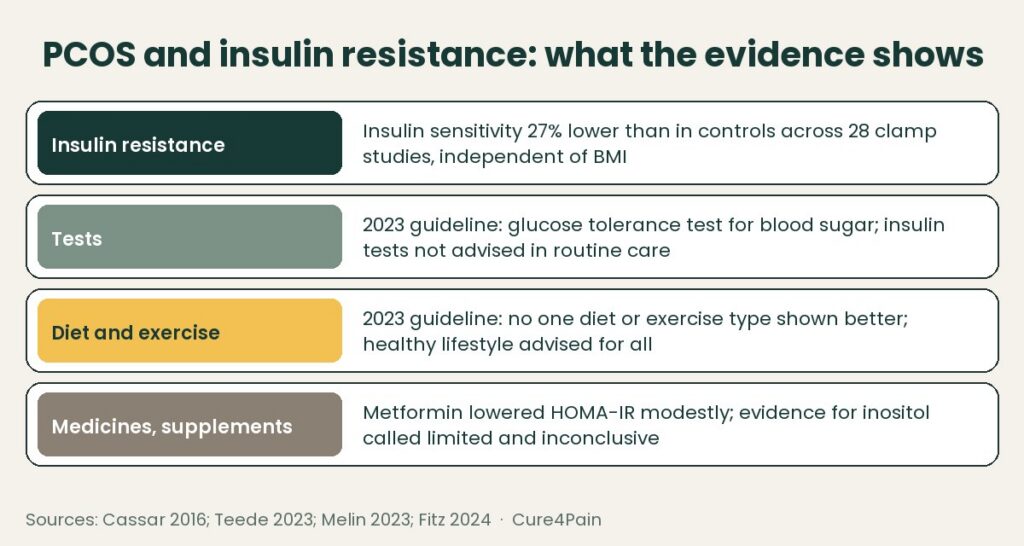
- How large the gap is: a 2016 meta-analysis of 28 studies using the euglycaemic clamp, the reference test for insulin sensitivity, found sensitivity 27% lower in women with PCOS than in controls, independent of BMI. A higher BMI lowered it by a further 15% [3].
- Which comes first: this is not settled. Clamp studies compare groups at one point in time, so they cannot show whether insulin resistance or PCOS came first. The authors of a 2013 clamp study concluded that their data strengthen the evidence for a causal role of insulin resistance [5], and the NHS says the cause of PMOS is unknown but may involve hormones such as insulin and testosterone [9].
- The new name: in 2026 a global consensus renamed PCOS as polyendocrine metabolic ovarian syndrome, because the old name implied ovarian cysts and hid the hormonal and metabolic features [2]. The NHS now uses PMOS [9]. A transition period is under way [2], and most studies and searches still say PCOS, so we use it here.
How many women with PCOS have insulin resistance?
Reported rates run from 64% on HOMA-IR in a 2005 study of 271 patients [4] to 75% of lean and 95% of overweight women in a small 2013 clamp study [5]. There is no single figure, because the answer depends on the test and the cut-off used:
| Women studied | Test | Had insulin resistance |
|---|---|---|
| 20 lean women with PCOS | Clamp | 75% [5] |
| 20 overweight women with PCOS | Clamp | 95%, against 62% of overweight women without PCOS [5] |
| 271 patients with PCOS | HOMA-IR, adjusted for age, race and BMI | 64% [4] |
Insulin resistance in PCOS is common but not universal: the authors of the 2005 study of 271 patients wrote that it “does not seem to be a universal feature” [4].
- Lean PCOS: insulin resistance was found in lean women too [5], and the guideline says the raised risk of blood sugar problems applies regardless of age and BMI [1]. Metabolic syndrome, however, was more common only in women with overweight or obesity, not in lean women, in a 2019 meta-analysis [10].
- Blood sugar risk: in a 2018 meta-analysis, women with PCOS had about 3.3 times the odds of impaired glucose tolerance and 2.9 times the odds of type 2 diabetes; the gap for impaired glucose tolerance was largest in Asian studies [11].
- In India: in a 2024 national study of 8,993 Indian women aged 18 to 40, PCOS affected 19.6% by the Rotterdam criteria and 7.2% by the NIH 1990 criteria. Of the 1,224 women with PCOS, 92% had abnormal blood fats, 33% fatty liver, 25% metabolic syndrome, 9% impaired glucose tolerance and 3% diabetes [12]. The 2023 guideline puts PCOS at 10% to 13% worldwide using the Rotterdam criteria [1].
What are the symptoms of insulin resistance in PCOS?
People with insulin resistance and prediabetes usually have no symptoms, according to the US National Institute of Diabetes and Digestive and Kidney Diseases (NIDDK) [8]. The symptoms you notice come from PCOS itself. According to the NHS, these can include irregular periods or long gaps between periods, excessive hair growth or hair loss, weight gain or difficulty losing weight, feeling very tired, and thick, dark patches of skin on the neck or armpits (acanthosis nigricans), and some women have no symptoms at all [9]. The 2023 International Evidence-based PCOS Guideline advises checking blood sugar in all adults and adolescents with PCOS at diagnosis [1].
How is PCOS diagnosed? The Rotterdam criteria
PCOS is diagnosed when 2 of 3 features are present and other causes are excluded. The 2003 Rotterdam consensus set this out, stating that no single feature is enough [13], and the 2023 International Evidence-based PCOS Guideline builds on it [1]. Insulin resistance is not one of the three features. The guideline sets out the features and exclusions as follows [1]:
- High androgens: excess hair growth, or raised total or free testosterone on a blood test.
- Ovulatory dysfunction: in adults, irregular cycles shorter than 21 days or longer than 35 days, or fewer than 8 cycles a year.
- Polycystic ovaries: in adults, 20 or more follicles in at least one ovary on ultrasound, or a raised AMH (anti-Mullerian hormone) blood test instead. AMH should not be used as a single test for diagnosis.
- Other causes excluded: thyroid hormone (TSH), prolactin, 17-OH progesterone and FSH blood tests, and Cushing’s syndrome or adrenal tumours if clinically indicated.
According to the 2023 guideline, if you have irregular cycles and high androgens, no ultrasound or AMH test is needed. In adolescents, both high androgens and ovulatory dysfunction are required, and ultrasound and AMH are not recommended [1].
Which tests check insulin resistance in PCOS?
Fasting insulin, HOMA-IR and the clamp test measure insulin resistance, but the 2023 International Evidence-based PCOS Guideline does not advise any routine test for it. It says “clinically available insulin assays are of limited clinical relevance” and that routinely available measures are inaccurate [1]. NIDDK likewise says the test for insulin resistance is used mainly for research [8]. The NHS differs: it lists blood tests to check hormone levels and insulin resistance among tests for PMOS [9]. The guideline does advise a glucose tolerance test, a lipid profile and blood pressure checks [1]:
| Test | What the 2023 guideline says [1] |
|---|---|
| Oral glucose tolerance test | The most accurate check of blood sugar in PCOS, regardless of BMI; done at diagnosis, then every 1 to 3 years depending on risk |
| Fasting glucose or HbA1c | Can be used if the glucose tolerance test cannot be done, with significantly reduced accuracy |
| Lipid profile | For all women with PCOS at diagnosis, regardless of age and BMI |
| Blood pressure | Every year, and when planning a pregnancy |
| Fasting insulin, HOMA-IR | Insulin assays not recommended in routine care |
HOMA-IR is a score calculated from fasting glucose and fasting insulin. The clamp is the reference test, but it belongs to research [3] [8].
What is the best diet for PCOS with insulin resistance?
No single diet has been shown to be best. The 2023 guideline says “there is no evidence to support any 1 type of diet composition over another”, advises sustainable healthy eating suited to your preferences, and cautions against unduly restrictive diets [1]. Studies of particular diets point in different directions, and most are small:
- Lower carbohydrate: in a 2019 meta-analysis of 8 randomised trials (327 women), lower-carbohydrate diets lowered BMI, HOMA-IR and cholesterol more than comparison diets [14].
- Overall certainty: a 2023 umbrella review of 28 meta-analyses found that lower-carbohydrate, DASH (Dietary Approaches to Stop Hypertension) and low glycaemic index diets improved some measures, with very low to low certainty, and “no high-certainty evidence that diets alone” improved health or reproductive outcomes [15].
- Weight: a 2019 Cochrane review of 15 trials (498 women) found lifestyle programmes may lower weight by about 1.7 kg compared with minimal or no treatment (9 trials, 353 women), with low-quality evidence and an uncertain effect on glucose tolerance [16]. The 2023 guideline notes benefits from a healthy lifestyle even without weight loss, and asks clinicians to consider eating disorders and weight stigma in PCOS [1].
A 7-day Indian vegetarian diet chart for PCOS and insulin resistance
A PCOS diet chart for Indian vegetarians can be built on millets, pulses, paneer, curd and cooked vegetables, with no sugar or processed food, as in the week below. No single diet has been shown to be best in PCOS [1], so this follows our clinic rules. It is a sample, not a prescription, and it has not been tested in a trial; your own plan depends on your tests, weight, medicines and preferences. It has no wheat roti, cabbage or cauliflower, and whole raw fruit appears only once in a while. Our usual plan is three meals a day, so take the evening snack only if it is advised for you.
- Monday: Breakfast: Paneer bhurji with capsicum (shimla mirch), finger millet roti (ragi roti). Lunch: Pearl millet roti (bajra roti), moong dal, bottle gourd (lauki) sabzi, curd (dahi). Evening snack: Roasted fox nuts (makhana). Dinner: Foxtail millet (kangni) khichdi with vegetables, spinach (palak) dal.
- Tuesday: Breakfast: Green moong cheela with mint chutney (pudina chutney). Lunch: Sorghum roti (jowar roti), kidney beans (rajma), okra (bhindi) sabzi. Evening snack: Roasted pumpkin seeds (kaddu ke beej). Dinner: Tofu with tomato and French beans, pearl millet roti, moong dal soup.
- Wednesday: Breakfast: Sorghum upma (jowar upma) with carrot (gajar). Lunch: Little millet (kutki) rice, pigeon pea dal (toor dal), apple gourd (tinda) sabzi, buttermilk (chaas). Evening snack: Papaya (papita). Dinner: Finger millet roti, black chickpea (kala chana) curry, ridge gourd (turai) sabzi.
- Thursday: Breakfast: Moong dal idli with sambar. Lunch: Pearl millet roti, red lentil dal (masoor dal), fenugreek (methi) sabzi, curd. Evening snack: Almonds (badam). Dinner: Barnyard millet (sanwa) pulao with vegetables, spinach with paneer (palak paneer).
- Friday: Breakfast: Gram flour cheela (besan cheela) with grated bottle gourd. Lunch: Sorghum roti, cowpea (lobia) curry, pumpkin (kaddu) sabzi, buttermilk. Evening snack: Roasted chickpeas (bhuna chana). Dinner: Foxtail millet rice, moong dal, bitter gourd (karela) sabzi.
- Saturday: Breakfast: Finger millet dosa (ragi dosa) with tomato chutney. Lunch: Barnyard millet khichdi with moong dal, French beans sabzi, curd. Evening snack: Guava (amrood). Dinner: Pearl millet roti, paneer and tomato curry, drumstick (sahjan) sabzi.
- Sunday: Breakfast: Steamed sprouted moong (ankurit moong) with tomato. Lunch: Sorghum roti, mixed dal, okra sabzi, buttermilk. Evening snack: Walnuts (akhrot). Dinner: Little millet khichdi with vegetables, tofu and capsicum sabzi.
Notes for the week:
- If you eat eggs, fish or chicken: these can replace paneer or dal at a meal.
- If intermittent fasting is advised for you: the same meals are fitted into the eating window set with your doctor.
- If you have ever had an eating disorder: tell your doctor before following any chart; the 2023 guideline asks clinicians to consider eating disorders in PCOS [1].
Does intermittent fasting help PCOS?
Intermittent fasting may help in PCOS, but the evidence is early, and in two trials time-restricted eating (eating only within a set daily window) did not beat ordinary calorie restriction.
- Weight: in a 2026 trial of 76 women with PCOS, eating within a 6-hour window lowered weight by 4.3% over 6 months compared with no diet change, about the same as 25% calorie restriction (4.7%). No serious side effects were reported [17].
- No added benefit: in an 8-week trial published in 2024, in 90 women with obesity and PCOS, eating within a 10-hour window was no better for weight, metabolic or hormone measures than a calorie-restricted three-meal diet [18].
- Insulin resistance: a 2026 meta-analysis of 4 trials (216 women) found lower HOMA-IR with time-restricted eating, and called the findings preliminary [19].
Which exercise is best for PCOS and insulin resistance?
No one type of exercise has been shown to be best for PCOS: the 2023 International Evidence-based PCOS Guideline finds “a lack of evidence supporting any 1 type and intensity of exercise” over another [1]. For adults it advises 150 to 300 minutes of moderate activity or 75 to 150 minutes of vigorous activity a week, plus muscle strengthening on 2 non-consecutive days [1].
- Intensity: in a 2020 meta-analysis of 777 women, from a review that also accepted non-randomised and uncontrolled trials, vigorous exercise gave small reductions in HOMA-IR (36%) and waist size (4%), and the authors suggest at least 120 minutes of vigorous exercise a week [20].
- Aerobic and resistance: in a 2025 meta-analysis of 10 trials (382 women), pooled results showed that aerobic exercise lowered insulin, cholesterol and triglycerides, although individual trials varied on triglycerides. Resistance exercise increased lean body mass and lowered body fat percentage, with little effect on hormones [21].
- Yoga: a 2023 meta-analysis found lower HOMA-IR and fasting insulin with yoga, but only 2 trials could be pooled and the strength of evidence was low [22].
Does metformin help insulin resistance in PCOS?
Metformin improves insulin resistance in PCOS modestly. A 2023 meta-analysis of randomised trials, carried out to inform the 2023 International Evidence-based PCOS Guideline, found that metformin lowered HOMA-IR by 0.50, BMI by 0.53 kg/m2 and fasting glucose by 0.13 mmol/L more than placebo, with moderate certainty and more mild stomach side effects [6].
- Who it is for: the guideline says metformin should be considered in adults with a BMI of 25 or more for weight and metabolic outcomes. It may be considered below 25, with limited evidence [1].
- Against lifestyle change: the guideline says women should be told that metformin and active lifestyle change have similar efficacy [1].
- Vitamin B12: metformin may be linked with low vitamin B12, especially with diabetes or a vegan diet, where the guideline advises considering monitoring [1].
- The contraceptive pill: the guideline names the combined pill as the first medicine for irregular periods and high androgens, and metformin mainly for metabolic features [1].
Does inositol help PCOS?
Inositol may help some metabolic measures in PCOS, but the evidence is uncertain. A 2024 review carried out for the 2023 International Evidence-based PCOS Guideline (30 trials, 2,230 women) found possible benefits for some metabolic measures, and called the evidence “limited and inconclusive” [7].
- Guideline position: inositol could be considered based on your preferences, with limited harm but limited clinical benefits. Specific types, doses or combinations cannot be recommended [1].
- Against metformin: the guideline prefers metformin for excess hair and central fat, while noting that metformin has more stomach side effects [1] [7].
- Later review: a 2026 umbrella review of 13 meta-analyses found lower HOMA-IR with inositol than with placebo or folic acid, but mostly no significant difference from metformin. Its evidence for HOMA-IR was rated moderate quality, and none of its evidence was rated high quality [23].
Do vitamin D, omega-3, magnesium, berberine or GLP-1 medicines help PCOS?
Vitamin D, omega-3 and magnesium improved some blood markers in studies of PCOS and GLP-1 medicines lowered BMI, but none has strong evidence for PCOS as a whole, and the 4 berberine trials were rated at high risk of compromised integrity. By option, research shows:
| Option | What research shows |
|---|---|
| Vitamin D | In a 2026 meta-analysis of 10 studies, mainly against placebo, HOMA-IR and fasting insulin were lower; fasting glucose, triglycerides and cholesterol did not change [24] |
| Omega-3 | In a 2023 meta-analysis of 7 studies (574 women), HOMA-IR, cholesterol and triglycerides were lower, with marked differences between studies; no change in BMI or fasting glucose [25] |
| Magnesium | In one small 2024 trial of 40 women, insulin and insulin resistance were lower; no change in body measures [26] |
| Berberine | Earlier reviews suggested it may match metformin. A 2026 integrity reappraisal rated all 4 trials (452 women) at high risk of compromised integrity, citing absent trial registration, implausible recruitment timelines and possible duplicated data; no reliable conclusion can be drawn [27] |
| GLP-1 medicines such as semaglutide | In a 2026 meta-analysis of 11 trials, BMI fell by 1.4 kg/m2 more than in comparison groups, with low certainty; evidence was insufficient for glucose and insulin [28] |
- GLP-1 medicines: the guideline says these could be considered alongside active lifestyle change for higher weight, with effective contraception when pregnancy is possible, because pregnancy safety data are lacking [1].
- Berberine safety: according to the US National Center for Complementary and Integrative Health, goldenseal, a herb containing berberine, should not be used in pregnancy or breastfeeding, the berberine in it can be harmful to newborns, and it lowered metformin levels by about 25% in healthy adults [29].
- Magnesium form: official limits are stated as elemental magnesium, and absorption varies by form, according to the US National Institutes of Health [30].
Can insulin resistance in PCOS improve, and how long does it take?
Insulin markers such as HOMA-IR can improve in PCOS with exercise, diet and metformin, but we found no trial giving a reliable time for everyone [6] [20] [14]. Exercise studies in a 2020 meta-analysis ran for 6 to 26 weeks [20], and two time-restricted eating trials ran for 8 weeks and 6 months [18] [17]. PCOS itself is long term: the 2023 International Evidence-based PCOS Guideline says the diagnosis could be considered lifelong and recommends a lifelong health plan [1]. The NHS advises regular check-ups, because PMOS can raise the risk of type 2 diabetes, high blood pressure, cardiovascular disease, fatty liver and womb cancer [9].
What should you do before a pregnancy with PCOS?
Talk to your obstetrician before you try to conceive: the 2023 International Evidence-based PCOS Guideline says PCOS “should be considered a high-risk condition in pregnancy” [1].
- Before pregnancy: the guideline advises offering a glucose tolerance test and reviewing weight, blood pressure, smoking, alcohol, diet, folate, exercise, sleep and mental health [1].
- Metformin in pregnancy: the guideline says metformin is not routinely recommended for pregnant women with PCOS and has not been shown to prevent gestational diabetes or pre-eclampsia [1].
At Cure4Pain we refer pregnant women to their obstetrician. Fertility treatment is not covered in this article.
How we manage the metabolic side of PCOS at Cure4Pain
At Cure4Pain we manage the insulin resistance and metabolic side of PCOS in-house, with the same base plan as our Metabolic Syndrome and Type 2 Diabetes pages, under clinical guidance from Team Cure4Pain and in coordination with your existing consulting physician.
- Who we see: adults and young people aged 16 and over. We refer children to a paediatrician and pregnant women to their obstetrician.
- Tests first: we read a panel of about 100 markers, adding tests for your condition when clinically indicated. It includes HbA1c, fasting glucose, fasting insulin, lipids, kidney and liver function, vitamin D and vitamin B12, with HOMA-IR when needed, plus uric acid, a liver ultrasound or liver stiffness scan, waist, body composition, thyroid tests and cortisol. For PCOS, the 2023 guideline supports an oral glucose tolerance test and, for diagnosis, testosterone, TSH, prolactin, 17-OH progesterone and FSH [1].
- Diet: low carbohydrate, home cooked and no processed foods; fruit and raw foods limited, with whole raw fruit once in a while; and three meals a day. We consider intermittent fasting for suitable patients under supervision. Also, as clinic practice, we generally advise most patients to replace wheat with jowar, bajra or other millets as a general health measure, including home-made roti from processed wheat, and as an observational clinic practice, we generally suggest limiting cruciferous (Brassica) vegetables such as cabbage and cauliflower.
- Exercise: resistance training for lean muscle, 5,000 to 7,000 steps a day, walking after meals, yoga and Buteyko breathing. We measure your waist.
- Nutrients: vitamin D corrected with standard supplement doses in most cases, magnesium (mainly bisglycinate, with L-threonate or citrate as advised, counted as elemental magnesium), vitamin B12 and omega-3, within official limits. Supplements are given by mouth first, with injections only when specifically needed or advised. We sometimes use inositol, and where triglycerides or blood sugar markers stay high we may add berberine under supervision. Please do not start berberine on your own if you take diabetes or other medicines.
- Medicines: Dr Krushal Pabari reviews metformin, statins and blood-pressure medicines and, depending on the case, may reduce them gradually after blood markers have improved for a sustained period; never stop or change them on your own.
- GLP-1 medicines: we do not usually prescribe GLP-1 weight-loss medicines and consider them only where clearly needed, in coordination with your physician. If you already take one, we work alongside it.
- Needling: we do not use needling or acupuncture for metabolic syndrome or weight.
- Follow-up: blood tests every 3 months, with monitoring continued for life. Many people notice changes in waist size, triglycerides and blood sugar markers within about 3 months; this is a clinic observation, and individual results vary. How long care lasts differs from person to person.
How research compares with these rules:
- Insulin tests: we use fasting insulin and HOMA-IR to follow one person over time. The 2023 guideline does not recommend insulin assays in routine care [1].
- Glucose tolerance test: the guideline names it as the most accurate check of blood sugar in PCOS [1], and we add it when clinically indicated.
- Low carbohydrate: some trials support it [14], but the guideline finds no one diet composition better than another [1].
- Intermittent fasting: in two trials it did not beat calorie restriction for weight, and a meta-analysis that found lower HOMA-IR called its findings preliminary [17] [18] [19]. The 2023 guideline asks clinicians to consider eating disorders in PCOS [1]. ADA 2026 advises medical monitoring during fasting for people with diabetes on insulin or secretagogue medicines, and says rigid meal plans can be contraindicated for people at increased risk of maladaptive eating behaviours [31]. We also do not advise fasting in pregnancy or breastfeeding.
- Inositol: the guideline says it offers limited clinical benefits and prefers metformin for excess hair and central fat [1]. Our use of it is clinic practice.
- Berberine: a 2026 integrity reappraisal rated all 4 trials in PCOS at high risk of compromised integrity, so reliable conclusions cannot be drawn [27]. Our use of it is clinic practice.
- GLP-1 medicines: the guideline says these could be considered alongside active lifestyle change for higher weight [1]. We consider them where clearly needed, in coordination with your physician.
- Wheat and millets: we found no trial of avoiding wheat or of eating millets in PCOS. A 2021 meta-analysis, mainly in diabetes, found that millets have a low glycaemic index and lowered blood sugar [32]. Replacing wheat is our clinic practice; a gluten-free diet is supported for coeliac disease and positive tests, and the NHS says people with coeliac disease must stop all gluten for life [33].
- Fruit and raw foods: we found no trial of limiting them in PCOS, and the DASH diet, which recommends fruit [34], improved some measures in a 2023 umbrella review, with very low to low certainty [15]. Limiting them is our clinic practice.
- Cruciferous vegetables: a 2024 review found normal intake with enough iodine did not harm thyroid function [35]. We found no trial in PCOS; limiting them is our observational clinic practice.
- Buteyko breathing: we found no trial in PCOS. We use it as part of holistic care for stress and metabolic health.
- Irregular periods and high androgens: this section covers the metabolic side only. The guideline’s first medicine for these is the combined pill [1]; where it is needed, Dr Krushal Pabari prescribes it in consultation with a gynaecologist.
An integrative plan may add options alongside standard care. This is our clinic practice; individual results vary, and further studies are needed.
If you would like your test results and PCOS plan reviewed together, you can book a consultation, online from anywhere or at our Mumbai clinic.
Frequently asked questions
Does PCOS cause insulin resistance, or is it the other way round?
This is not settled. Insulin sensitivity is lower in women with PCOS regardless of BMI, and the 2023 guideline calls insulin resistance a pathophysiological factor, but studies at one point in time cannot show which came first. [3] [1]
Can you have PCOS without insulin resistance?
Yes. In a study of 271 patients, 64% had insulin resistance on HOMA-IR, and the authors said it does not seem to be universal. It is also found in lean women, in 75% of 20 lean women in one clamp study. [4] [5]
What blood test shows insulin resistance in PCOS?
HOMA-IR, calculated from fasting glucose and fasting insulin, is one such test, but the 2023 guideline does not recommend insulin assays in routine care. It names the oral glucose tolerance test as the most accurate check of blood sugar. At Cure4Pain we use HOMA-IR to follow one person over time. [1]
Which foods should I avoid with PCOS and insulin resistance?
The 2023 guideline recommendations give no list of foods to avoid. As clinic practice, Cure4Pain advises avoiding processed foods, replacing wheat with jowar, bajra or other millets, and limiting cruciferous vegetables, fruit and raw foods; these rules are not tested in PCOS trials. [1]
Does metformin help with weight loss in PCOS?
Modestly. In a meta-analysis of trials carried out for the 2023 guideline, BMI fell by 0.53 kg/m2 more with metformin than with placebo. The guideline says metformin and active lifestyle change have similar efficacy. [6] [1]
Is inositol better than metformin for PCOS?
The evidence does not show that inositol is better than metformin. The 2023 guideline prefers metformin for excess hair and central fat, while inositol likely causes fewer stomach side effects. A 2024 review for the guideline called the evidence for inositol limited and inconclusive. [1] [7]
Which exercise is best for PCOS belly fat?
No one type has been shown to be best. In one meta-analysis, vigorous exercise lowered waist size by about 4%, and the 2023 guideline advises 150 to 300 minutes of moderate activity a week plus muscle strengthening. [20] [1]
Is PCOS the same as PMOS?
Yes. In 2026 a global consensus renamed polycystic ovary syndrome as polyendocrine metabolic ovarian syndrome, and the NHS now uses the new name. [2] [9]
Can insulin resistance in PCOS go away?
Insulin markers can improve with exercise, diet and medicines, but the 2023 guideline says PCOS could be considered lifelong and recommends a lifelong health plan, so monitoring needs to continue. [1] [6] [20]
Is there a diet chart for PCOS?
No chart has been shown to be best, because the 2023 guideline finds no one diet composition better than another. Our 7-day Indian vegetarian chart above is a sample, not a prescription, and it has not been tested in a trial. [1]
This article is for education and does not replace medical advice. Do not start, stop or change any medicine or supplement without medical guidance.
References
1. Teede HJ, et al. Recommendations From the 2023 International Evidence-based Guideline for the Assessment and Management of Polycystic Ovary Syndrome. J Clin Endocrinol Metab 2023;108(10):2447-2469. doi:10.1210/clinem/dgad463
2. Teede HJ, et al. Polyendocrine metabolic ovarian syndrome, the new name for polycystic ovary syndrome: a multistep global consensus process. Lancet 2026;407(10545):2329-2339. doi:10.1016/S0140-6736(26)00717-8
3. Cassar S, et al. Insulin resistance in polycystic ovary syndrome: a systematic review and meta-analysis of euglycaemic-hyperinsulinaemic clamp studies. Hum Reprod 2016;31(11):2619-2631. doi:10.1093/humrep/dew243
4. DeUgarte CM, et al. Prevalence of insulin resistance in the polycystic ovary syndrome using the homeostasis model assessment. Fertil Steril 2005;83(5):1454-60. doi:10.1016/j.fertnstert.2004.11.070
5. Stepto NK, et al. Women with polycystic ovary syndrome have intrinsic insulin resistance on euglycaemic-hyperinsulaemic clamp. Hum Reprod 2013;28(3):777-84. doi:10.1093/humrep/des463
6. Melin J, et al. The impact of metformin with or without lifestyle modification versus placebo on polycystic ovary syndrome: a systematic review and meta-analysis of randomized controlled trials. Eur J Endocrinol 2023;189(2):S37-S63. doi:10.1093/ejendo/lvad098
7. Fitz V, et al. Inositol for Polycystic Ovary Syndrome: A Systematic Review and Meta-analysis to Inform the 2023 Update of the International Evidence-based PCOS Guidelines. J Clin Endocrinol Metab 2024;109(6):1630-1655. doi:10.1210/clinem/dgad762
8. National Institute of Diabetes and Digestive and Kidney Diseases (NIDDK), US National Institutes of Health. Insulin Resistance & Prediabetes. niddk.nih.gov
9. NHS (UK National Health Service). Polyendocrine metabolic ovarian syndrome (PMOS). nhs.uk/conditions/polyendocrine-metabolic-ovarian-syndrome-pmos
10. Lim SS, et al. Metabolic syndrome in polycystic ovary syndrome: a systematic review, meta-analysis and meta-regression. Obes Rev 2019;20(2):339-352. doi:10.1111/obr.12762
11. Kakoly NS, et al. Ethnicity, obesity and the prevalence of impaired glucose tolerance and type 2 diabetes in PCOS: a systematic review and meta-regression. Hum Reprod Update 2018;24(4):455-467. doi:10.1093/humupd/dmy007
12. Ganie MA, et al. Prevalence, Phenotypes, and Comorbidities of Polycystic Ovary Syndrome Among Indian Women. JAMA Netw Open 2024;7(10):e2440583. doi:10.1001/jamanetworkopen.2024.40583
13. Rotterdam ESHRE/ASRM-Sponsored PCOS consensus workshop group. Revised 2003 consensus on diagnostic criteria and long-term health risks related to polycystic ovary syndrome (PCOS). Hum Reprod 2004;19(1):41-7. doi:10.1093/humrep/deh098
14. Zhang X, et al. The Effect of Low Carbohydrate Diet on Polycystic Ovary Syndrome: A Meta-Analysis of Randomized Controlled Trials. Int J Endocrinol 2019;2019:4386401. doi:10.1155/2019/4386401
15. Moslehi N, et al. Effects of nutrition on metabolic and endocrine outcomes in women with polycystic ovary syndrome: an umbrella review of meta-analyses of randomized controlled trials. Nutr Rev 2023;81(5):555-577. doi:10.1093/nutrit/nuac075
16. Lim SS, et al. Lifestyle changes in women with polycystic ovary syndrome. Cochrane Database Syst Rev 2019;3(3):CD007506. doi:10.1002/14651858.CD007506.pub4
17. Corapi S, et al. Time-restricted eating for body weight management in women with polycystic ovary syndrome: a randomized controlled trial. Nat Med 2026;32(6):2155-2163. doi:10.1038/s41591-026-04316-7
18. Talebi S, et al. The effects of time-restricted eating alone or in combination with probiotic supplementation in comparison with a calorie-restricted diet on endocrine and metabolic profiles in women with polycystic ovary syndrome: A randomized clinical trial. Diabetes Obes Metab 2024;26(10):4468-4479. doi:10.1111/dom.15801
19. Hamsho M, et al. The Effects of Time-Restricted Eating in Women with Polyendocrine Metabolic Ovarian Syndrome: A Systematic Review and Meta-Analysis. Nutrients 2026;18(13). doi:10.3390/nu18132096
20. Patten RK, et al. Exercise Interventions in Polycystic Ovary Syndrome: A Systematic Review and Meta-Analysis. Front Physiol 2020;11:606. doi:10.3389/fphys.2020.00606
21. Cavalcante DCB, et al. Effects of physical activity in women with polycystic ovary syndrome: a systematic review and meta-analysis. Rev Bras Ginecol Obstet 2025;47. doi:10.61622/rbgo/2025rbgo56
22. Verma A, et al. Effect of Yoga Therapy on Health Outcomes in Women With Polycystic Ovary Syndrome: A Systematic Review and Meta-Analysis. Am J Lifestyle Med 2023;17(1):73-92. doi:10.1177/15598276211029221
23. Duan M, et al. Effects of inositol in women with polycystic ovary syndrome: an umbrella review of meta-analyses from randomized controlled trials. Front Endocrinol (Lausanne) 2026;17:1741509. doi:10.3389/fendo.2026.1741509
24. Wu B, Yao J. A meta-analysis of the effects of vitamin D supplementation on endocrine metabolic and inflammatory markers in patients with polycystic ovarian syndrome. Medicine (Baltimore) 2026;105(1):e46892. doi:10.1097/MD.0000000000046892
25. Huang Y, Zhang X. Meta-analysis of the efficacy of ω-3 polyunsaturated fatty acids when treating patients with polycystic ovary syndrome. Medicine (Baltimore) 2023;102(39):e35403. doi:10.1097/MD.0000000000035403
26. Shahmoradi S, et al. The Effect of Magnesium Supplementation on Insulin Resistance and Metabolic Profiles in Women with Polycystic Ovary Syndrome: a Randomized Clinical Trial. Biol Trace Elem Res 2024;202(3):941-946. doi:10.1007/s12011-023-03744-7
27. Perera E, et al. Questionable Evidence for Berberine in Polyendocrine Metabolic Ovarian Syndrome: An Integrity-Based Reappraisal. Adv Ther 2026. doi:10.1007/s12325-026-03799-7
28. Forslund M, et al. GLP-1 receptor agonist treatment in women with polycystic ovary syndrome-a systematic review and meta-analysis. Eur J Endocrinol 2026;194(3):25-39. doi:10.1093/ejendo/lvag033
29. National Center for Complementary and Integrative Health (NCCIH), US National Institutes of Health. Goldenseal: Usefulness and Safety. nccih.nih.gov/health/goldenseal
30. National Institutes of Health, Office of Dietary Supplements. Magnesium: Fact Sheet for Health Professionals. ods.od.nih.gov
31. American Diabetes Association Professional Practice Committee for Diabetes. 5. Facilitating Positive Health Behaviors and Well-being to Improve Health Outcomes: Standards of Care in Diabetes-2026. Diabetes Care 2026;49(Supplement_1):S89-S131. doi:10.2337/dc26-S005
32. Anitha S, et al. A Systematic Review and Meta-Analysis of the Potential of Millets for Managing and Reducing the Risk of Developing Diabetes Mellitus. Front Nutr 2021;8:687428. doi:10.3389/fnut.2021.687428
33. NHS (UK National Health Service). Coeliac disease: treatment. nhs.uk/conditions/coeliac-disease/treatment
34. National Heart, Lung, and Blood Institute (NHLBI), US National Institutes of Health. DASH Eating Plan. nhlbi.nih.gov
35. Galanty A, et al. Do Brassica Vegetables Affect Thyroid Function?-A Comprehensive Systematic Review. Int J Mol Sci 2024;25(7). doi:10.3390/ijms25073988