Written by AT. Chintan Dalal, N.D. · Reviewed by Dr Krushal Pabari, Clinical Team, Cure4Pain · Updated 30 October 2026
Key facts
We found no evidence that any vitamin at ordinary amounts worsens lupus, and a 2024 patient-driven review of 28 systematic reviews in the journal Nutrients states that “no dietary supplement has conclusively been shown to worsen disease activity” [1]. The firmest caution is alfalfa: monkeys fed the sprouts developed a lupus-like illness in a 1982 study in Science [2], and 4 previously healthy people taking alfalfa tablets developed one that cleared after stopping, according to a 2021 review in the Journal of the American Academy of Dermatology [3]. A 2025 scoping review in Lupus Science & Medicine, on autoimmune skin diseases, which include lupus, named 15 herbs with the strongest evidence of stimulating the immune system, including echinacea, garlic, spirulina, ashwagandha and giloy; it reports mostly immune effects, with flares linked to several of them but not proven [4]. No guideline sets a lupus diet. The 2021 EULAR recommendations advise a healthy, balanced diet [5], and the KDIGO (Kidney Disease: Improving Global Outcomes) 2024 guideline advises avoiding a high-sodium diet in lupus nephritis [6]. Low vitamin D is common in lupus: in a 2008 study of 92 mostly white people with lupus, 75% had insufficient levels, linked with sun avoidance, although levels were not related to lupus severity in that study [7].

Scientific explainer videos in our Resources section
In our Resources section, our clinical team discusses vitamin D, its cofactors and how autoimmune, lifestyle and pain conditions develop.
Which vitamins should you avoid with lupus?
No vitamin at ordinary amounts has been shown to worsen lupus: we found no study showing harm at normal intake, and the concern is high-dose products taken without supervision. A 2024 patient-driven review of 28 systematic reviews advises that “any supplementation is carried out under medical supervision” [1]. Our lupus page covers symptoms, tests and treatment; this article stays with food and supplements.
| Vitamin | What official sources and studies say |
|---|---|
| Vitamin D | Often low in lupus [7]. Trials are mixed on benefit [8] [9]. The NHS says not to take more than 100 micrograms (4,000 IU) a day, because too much can raise calcium and damage the kidneys and heart [10] |
| Vitamin A | The NHS advises no more than 1.5 mg (1,500 micrograms) a day from food and supplements combined; more over many years may make bones more likely to fracture [11]. Steroids also cause bone loss [6] |
| Vitamins C and E | Over 1,000 mg of vitamin C a day can cause stomach pain and diarrhoea, according to the NHS [12]. In a 12-week pilot trial of 39 people with lupus, the two together lowered one oxidative stress marker but did not change blood vessel function [13] |
| Vitamin B6 | The NHS says 200 mg or more a day can cause loss of feeling in the arms and legs, and advises no more than 10 mg a day in supplements unless a doctor advises it [14]; see our article on neuropathy and vitamins. We found no lupus study of high-dose supplements. In 216 Japanese women with inactive lupus, more B6 from food went with a lower risk of active disease, which does not prove cause [15] |
Minerals are less clear. A 2000 review listed zinc and iron among possibly aggravating substances, along with excess calories and protein, but its authors say the findings rest on few studies, many without control groups or taken from animal models [16]. We found no randomised trial of zinc or iron supplements in lupus.
Which supplements and herbs should you avoid with lupus?
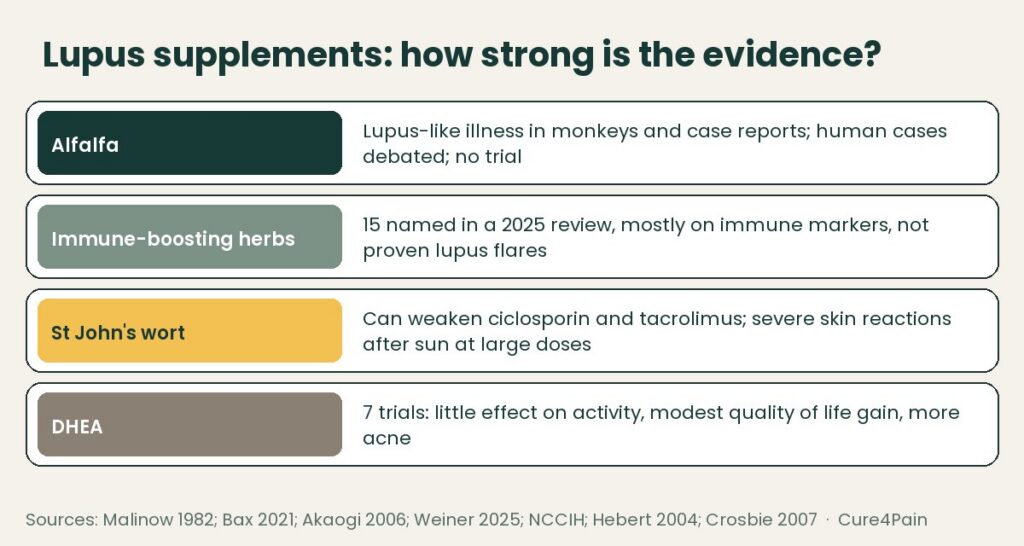
Alfalfa has the most direct link with lupus, from monkey studies and human case reports described in a 2021 review in the Journal of the American Academy of Dermatology [2] [3]. Other immune-stimulating herbs and St John’s wort carry weaker or indirect cautions, and DHEA is a hormone, not a simple supplement. These are research findings, with the strength of each shown, not a clinic list.
| Product | What research shows | Strength of evidence |
|---|---|---|
| Alfalfa tablets, seeds and sprouts | Lupus-like illness in monkeys; L-canavanine, an amino acid in alfalfa, reactivated it [2]. 4 people taking 12 to 24 tablets a day for up to 7 months developed a lupus-like illness that cleared on stopping, and later case reports describe new lupus or flares [3] | Animal work and case reports; a 2006 review calls the human cases controversial [17]; no trial |
| Echinacea | Reported in a flare of pemphigus, another autoimmune disease [18]; no lupus cases in a 2021 review [3]. The US National Institutes of Health (NIH) sees theoretical reasons for an interaction with immunosuppressants [19] | Case reports and theory; no lupus trial |
| Spirulina and chlorella | Spirulina reported in flares of pemphigus and dermatomyositis [18]; no reports of chlorella causing autoimmune disease as of 2021, though it stimulates immune cells in the laboratory [3] | Case reports, not in lupus |
| Giloy (tinospora) | In India, 43 people across 13 centres had liver injury after giloy, with autoimmune features in some [20]. A 2023 review argues the wrong species or adulteration may explain such cases [21] | Retrospective, not in lupus; authors disagree |
| Ashwagandha, astragalus, ginseng, garlic supplements, green tea extract, liquorice, noni, mistletoe, reishi, skullcap | Immune stimulation in laboratory, animal and human studies, according to a 2025 scoping review in Lupus Science & Medicine [4] | Mostly immune markers; the authors say several of the 15 herbs have been linked with flares, including in lupus, and long-term data and trials are lacking for many |
| St John’s wort | Can weaken ciclosporin and, in large doses, might cause severe skin reactions after sun exposure, according to the NIH [22]; lowered tacrolimus exposure in 10 healthy volunteers [23] | Interaction well documented; no lupus trial |
| DHEA (prasterone) | Across 7 trials with 842 people: little effect on disease activity in mild to moderate lupus, a modest quality of life gain, doubled risk of acne [24]. In a trial of up to 12 months in women with active lupus, among those with clinically active disease at the start, more improved or stabilised than on placebo (58.5% against 44.5%), with excess hair growth in 16% against 2%, mostly mild, and lower HDL cholesterol [25] | Randomised trials; Cochrane notes long-term safety is unstudied [24] |
Read these limits alongside the table:
- Immune effects are not proven flares: the 2025 scoping review in Lupus Science & Medicine, written for autoimmune skin diseases such as lupus, included studies showing immune stimulation. Its authors say several of the 15 herbs have been associated with flares of autoimmune diseases, including lupus, but cite “the lack of long-term data and randomised controlled trials” for many of the herbs [4].
- What experts advise: given the apparent link, several experts, including the Lupus Foundation of America, have recommended that people with lupus avoid alfalfa, according to a 2021 review in the Journal of the American Academy of Dermatology. Its authors go further and say people with autoimmune diseases should be advised to avoid immune-stimulating herbs, naming spirulina, chlorella, echinacea and alfalfa [3]. This is their opinion from case reports and laboratory work, not trial evidence.
- Garlic in cooking: the 2025 review covers supplements, and we found no study of garlic used in food in lupus.
- Liquorice and steroids: the NHS says not to eat real liquorice while taking prednisolone, because it can raise the amount of medicine in the body [26].
- Quality and kidneys: some Ayurvedic remedies have been found to contain arsenic or mercury [27], and a 2021 review warns about kidney injury from some herbal products, especially in chronic kidney disease [28].
What foods should you avoid with lupus?
No single food is proven to worsen lupus in people. The closest concern is alfalfa sprouts: monkeys fed them developed a lupus-like illness, and the human reports involve other alfalfa products [2] [3]. A 2024 patient-driven review of 28 systematic reviews states that “current research does not specifically address how individual foods directly impact SLE management” [1], where SLE means systemic lupus erythematosus.
| Food | What research shows | Strength of evidence |
|---|---|---|
| Salt | Worsened lupus in mice [29]. No clear immune link in 37 people with lupus [30], and no link with having lupus in the UK Biobank [31]. KDIGO advises avoiding a high-sodium diet in lupus nephritis [6] | Guideline advice for kidney disease; otherwise mixed |
| Ultra-processed foods and sweetened drinks | Among 204,175 US nurses, 212 developed lupus. The highest third of ultra-processed food intake went with a 56% higher risk than the lowest third, and sugar-sweetened or artificially sweetened drinks with a 45% higher risk [32] | Observational; about developing lupus, not flares |
| Alcohol | Small amounts are unlikely to harm people with rheumatic diseases, according to EULAR [5] | Guideline statement, not lupus-specific; ask about alcohol with your medicines |
| Grapefruit | The tacrolimus label says not to have it, because it raises the medicine’s levels [33] | Applies if you take tacrolimus |
| Cruciferous vegetables | No lupus trial. A 2024 review of 123 studies found no thyroid harm with enough iodine [34], and a plant compound from them lessened kidney damage in lupus-prone mice [35] | Animal and non-lupus data only. As an observational clinic practice, we generally suggest limiting them |
| Dairy, gluten, tomato, potato, brinjal, eggs | We found no lupus trial of cutting out any of these. In a UK online survey, people reported fewer symptoms after cutting dairy or processed food [36]. In a 13-week trial in 33 people with lupus, probiotic yogurt made no significant difference to disease activity compared with yogurt without the bacteria [37]. A low-gluten trial protocol has been published, with no results yet [38] | Self-report, plus one small yogurt trial |
Salty foods in an Indian diet include pickles, papad and namkeen. If you notice a clear pattern with any food, keep a record and discuss it at your next review.
What should you eat with lupus?
A healthy, balanced diet is the general advice for lupus. The 2021 EULAR recommendations advise it for people with rheumatic diseases [5], and a 2024 patient-driven review of 28 systematic reviews found “no consistent evidence” that any specific diet lowers lupus activity [1]. We do not publish a lupus diet chart, because no trial supports one.
- Mediterranean pattern: in a small 24-week trial of olive oil with or without a lifestyle programme, disease activity did not change, though blood pressure improved [39]. In an Indian kitchen this could mean dal and vegetables at each meal, fruit, nuts and seeds, whole grains, cold-pressed oils, and fish or eggs for those who eat them.
- Omega-3: a 2020 meta-analysis of 5 trials with 274 people showed a fall of 0.9 points on a standard disease activity score (SLEDAI), rated as low certainty evidence [40]. In a 2024 trial of 78 people with active lupus, the Omega-3 Index began at about 4.4% and rose with krill oil; disease activity did not change overall and fell only in a subgroup of 18 people with high activity at the start [41]. Our article on omega-3 and autoimmune disease has more.
- Turmeric: a 2023 systematic review of 3 small trials found that curcumin lowered urine protein, with no change in disease activity scores, and says no uniform dose can be advised [42].
- Weight on steroids: in a 6-week trial of 23 overweight women with stable lupus, low glycaemic index and low-calorie diets both lowered weight and fatigue, with no increase in disease activity [43].
What is the best diet for lupus nephritis? Protein, salt and potassium
There is no fixed lupus nephritis diet; it depends on your kidney function, so plan it with a kidney specialist (nephrologist) and a dietitian. The US National Institute of Diabetes and Digestive and Kidney Diseases (NIDDK) says that people with lupus nephritis “may need to change what you eat” and suggests a dietitian [44].
- Salt: KDIGO 2024 advises avoiding a high-sodium diet to protect the kidneys [6]. NIDDK gives a limit of no more than 2,300 mg of sodium a day for adults and says many people with chronic kidney disease need less [45].
- Salt substitutes: NIDDK advises spices and herbs instead, because salt substitutes can be high in potassium [45].
- Protein: NIDDK gives no single amount and advises working it out with your dietitian [45]. A 2024 patient-driven review says protein supplements have not been well studied in lupus and advises people with kidney problems “to proceed with caution” [1].
- Potassium: the right amount is individual [45]. Tacrolimus can raise potassium, and its label advises blood monitoring [33].
Do lupus steroids change what you should eat?
Yes. Steroids such as prednisolone change diet planning mainly for bones, blood sugar and weight: KDIGO 2024 says they increase bone loss [6], a lupus cohort linked more steroid exposure with more insulin resistance [46], and the NHS lists increased appetite and weight gain as common side effects [26].
- Bones: steroids increase bone loss, and KDIGO 2024 recommends calcium (optimal intake 1,000 to 1,200 mg a day) and vitamin D for people with lupus nephritis [6]. The 2022 American College of Rheumatology (ACR) guideline strongly recommends a fracture risk assessment soon after starting steroids planned for over 3 months [47].
- Blood sugar: in an international cohort of people recently diagnosed with lupus, more steroid exposure went with more insulin resistance [46].
- Weight: the NHS lists increased appetite and weight gain as common side effects of prednisolone [26].
Which foods and supplements interact with hydroxychloroquine?
According to the NHS, you can eat and drink normally while taking hydroxychloroquine [48]. The cautions are antacids and some medicines, according to the US prescribing information [49]:
- Antacids: the label says they can reduce absorption of the related medicine chloroquine, and that at least 4 hours should separate them [49]. The NHS says antacids and other indigestion medicines may stop hydroxychloroquine being absorbed properly [48].
- Blood sugar: hydroxychloroquine can lower blood sugar and may add to the effect of insulin and diabetes medicines [49].
- Other medicines: it can raise ciclosporin levels, and it is not recommended with other medicines that affect heart rhythm [49].
- Herbs and supplements: the NHS asks you to tell your doctor or pharmacist about any you take [48].
Does sun protection affect vitamin D in lupus?
Sun protection is linked with low vitamin D in lupus. A 2008 cross-sectional study of 92 people with lupus found that photoprotection predicted vitamin D deficiency, while taking hydroxychloroquine went with lower odds of it; vitamin D levels were not related to lupus severity [7]. A 2014 study of 129 Indian patients did find lower levels with higher disease activity, which also does not show cause [50]. Sun protection still comes first: a 2024 systematic review says it should be recommended to everyone with lupus [51], and the NHS advises at least factor 50 sunscreen and a hat [52].
Trials of vitamin D supplements are mixed: a 2026 analysis of 10 trials with 847 people found lower disease activity and better complement levels, but no significant change in fatigue [8]; a 2019 analysis of 5 trials found less fatigue but no clear change in disease activity [9].
More on safe limits is in our article on vitamin D toxicity.
How we approach diet and supplements in lupus at Cure4Pain
At Cure4Pain, we have no special lupus avoid-list; nutrition is planned from your tests and medicines, alongside guideline treatment and never in place of it.
- Guideline medicines: according to the 2023 EULAR recommendations, hydroxychloroquine is recommended for everyone with lupus, with steroids as a short bridge, kept low and stopped when possible. Methotrexate, azathioprine or mycophenolate, and the biological medicines belimumab or anifrolumab, are started early when needed; cyclophosphamide and rituximab are for organ-threatening or refractory disease [53]. The 2025 ACR guideline, for lupus without kidney involvement, also emphasises uniform treatment with hydroxychloroquine, limiting the duration of steroids and early immunosuppressive or biological treatment [54].
- Kidney involvement: EULAR recommends steroids with mycophenolate or low-dose intravenous cyclophosphamide, with belimumab or a calcineurin inhibitor (voclosporin or tacrolimus) as add-ons [53]; the 2024 ACR guideline advises a steroid course plus two additional immunosuppressive medicines, continued for 3 to 5 years in people with a complete kidney response [55].
- Who prescribes: at Cure4Pain, Dr Krushal Pabari prescribes and adjusts these medicines as per guidelines, under clinical guidance from Team Cure4Pain, in coordination with your existing consulting physician and with a kidney specialist (nephrologist) where the kidneys are involved; never stop or change them on your own.
- Tests: we read a panel of about 100 markers, adding tests for your condition when clinically indicated, such as ANA, complement proteins and lupus-specific antibodies, all part of the 2019 EULAR/ACR classification criteria [56]. At follow-up we review blood pressure, weight and waist, fasting glucose, HbA1c and fasting insulin, lipids, kidney tests and vitamin D, with findings shared with your existing consulting physician.
- Nutrients where your tests and clinical picture show a need: monitored vitamin D, and cofactors such as magnesium, vitamin K2, riboflavin, selenium, zinc and B12, by mouth first, with injections only when specifically needed or advised; magnesium is mainly bisglycinate, with L-threonate or citrate as advised, counted as elemental magnesium. Omega-3 is part of each plan unless there is a reason not to, from fish for people who eat it and from algal oil for vegetarians and vegans.
- Food: identifying food sensitivities and supporting gut health. As an observational clinic practice, we generally suggest limiting cruciferous (Brassica) vegetables such as cabbage and cauliflower; the research on them is in the food table above. As a general health measure, not a lupus rule, we generally advise most patients to replace wheat with jowar, bajra or other millets, including home-made roti from processed wheat; a gluten-free diet is supported for coeliac disease and positive tests, the NHS says people with coeliac disease must stop all gluten for life [57], and our PubMed search (October 2026) found no randomised trial of wheat or gluten in lupus.
- Supervised vitamin D therapy (Coimbra Protocol): one of the therapies we use for some patients, with a calcium-restricted diet, plenty of fluids and monitoring of vitamin D, PTH, ionised calcium, and liver and kidney function, as our Coimbra Protocol page explains. We found no randomised trial of the Coimbra Protocol in lupus. Our methods are derived from the work of Dr Coimbra. With significant kidney involvement the plan is agreed with the nephrologist, and this therapy may not be suitable; calcium advice for lupus nephritis is settled with the nephrologist in the same way.
This is our clinic practice; individual results vary, and further studies are needed.
If you would like nutrition and supplements reviewed against your blood tests and lupus medicines, you can book a consultation, online from anywhere or at our Mumbai clinic.
Frequently asked questions
What vitamins should you avoid with lupus?
No vitamin at ordinary amounts has been shown to worsen lupus. The caution is about high doses without supervision: the NHS sets limits of 4,000 IU a day for vitamin D and 1.5 mg a day for vitamin A. [1] [10] [11]
What supplements are bad for lupus?
Alfalfa has the most direct link, from animal work and case reports. A 2025 review also names immune-stimulating herbs such as echinacea, spirulina, ashwagandha and giloy, mostly on immune markers, and St John’s wort can interact with some lupus medicines. [3] [4] [22]
What vitamins can I take with lupus?
Vitamin D trials in lupus are mixed: a 2026 analysis of 10 trials found lower disease activity, while a 2019 analysis of 5 trials found no clear change. A 2020 analysis of 5 omega-3 trials found a fall of 0.9 points on a disease activity score, rated low certainty. Take any supplement under medical supervision, because the right choice depends on your tests, kidneys and medicines. [8] [9] [40] [1]
Can people with lupus eat garlic?
We found no study of garlic in food in lupus. A 2025 review lists garlic among herbal supplements that stimulate the immune system, without proving flares in lupus. [4]
Can lupus patients eat tomatoes, eggs or red meat?
We found no lupus trial of tomatoes, eggs or red meat, and a 2024 review of 28 systematic reviews says current research does not specifically address how individual foods affect lupus. [1]
What foods can trigger a lupus flare?
No food is proven to trigger lupus flares. The clearest concern is alfalfa, which rests on monkey studies and case reports of alfalfa products, and a 2024 review of 28 systematic reviews says current research does not specifically address how individual foods affect lupus. [2] [3] [1]
Can I take vitamins with hydroxychloroquine?
Tell your doctor or pharmacist first: the NHS asks you to mention any vitamins or supplements you take with hydroxychloroquine. The NHS also says antacids may stop it being absorbed properly, and the US prescribing information advises a gap of at least 4 hours between antacids and the related medicine chloroquine. [48] [49]
This article is for education and does not replace medical advice. Do not start, stop or change any medicine or supplement without medical guidance.
References
1. Sciascia S, et al. The Interconnection Between Systemic Lupus Erythematosus and Diet: Unmet Needs, Available Evidence, and Guidance-A Patient-Driven, Multistep-Approach Study. Nutrients 2024;16(23). doi:10.3390/nu16234132
2. Malinow MR, et al. Systemic lupus erythematosus-like syndrome in monkeys fed alfalfa sprouts: role of a nonprotein amino acid. Science 1982;216(4544):415-7. doi:10.1126/science.7071589
3. Bax CE, et al. The effects of immunostimulatory herbal supplements on autoimmune skin diseases. J Am Acad Dermatol 2021;84(4):1051-1058. doi:10.1016/j.jaad.2020.06.037
4. Weiner JD, et al. Identifying immunostimulatory herbal supplements that may flare autoimmune skin diseases: a systematic scoping review. Lupus Sci Med 2025;12(2). doi:10.1136/lupus-2025-001803
5. Gwinnutt JM, et al. 2021 EULAR recommendations regarding lifestyle behaviours and work participation to prevent progression of rheumatic and musculoskeletal diseases. Ann Rheum Dis 2023;82(1):48-56. doi:10.1136/annrheumdis-2021-222020
6. Kidney Disease: Improving Global Outcomes (KDIGO) Lupus Nephritis Work Group. KDIGO 2024 Clinical Practice Guideline for the management of LUPUS NEPHRITIS. Kidney Int 2024;105(1S):S1-S69. doi:10.1016/j.kint.2023.09.002
7. Ruiz-Irastorza G, et al. Vitamin D deficiency in systemic lupus erythematosus: prevalence, predictors and clinical consequences. Rheumatology (Oxford) 2008;47(6):920-3. doi:10.1093/rheumatology/ken121
8. Lu J, et al. Effects of vitamin D supplementation on patients with systemic lupus erythematosus: A systematic review and meta-analysis. Autoimmun Rev 2026;25(5):104057. doi:10.1016/j.autrev.2026.104057
9. Zheng R, et al. Efficacy and Safety of Vitamin D Supplementation in Patients With Systemic Lupus Erythematosus: A Meta-analysis of Randomized Controlled Trials. Am J Med Sci 2019;358(2):104-114. doi:10.1016/j.amjms.2019.04.020
10. NHS (UK National Health Service). Vitamin D. nhs.uk/conditions/vitamins-and-minerals/vitamin-d
11. NHS (UK National Health Service). Vitamin A. nhs.uk/conditions/vitamins-and-minerals/vitamin-a
12. NHS (UK National Health Service). Vitamin C. nhs.uk/conditions/vitamins-and-minerals/vitamin-c
13. Tam LS, et al. Effects of vitamins C and E on oxidative stress markers and endothelial function in patients with systemic lupus erythematosus: a double blind, placebo controlled pilot study. J Rheumatol 2005;32(2):275-82. PubMed 15693087
14. NHS (UK National Health Service). B vitamins and folic acid. nhs.uk/conditions/vitamins-and-minerals/vitamin-b
15. Minami Y, et al. Intakes of vitamin B6 and dietary fiber and clinical course of systemic lupus erythematosus: a prospective study of Japanese female patients. J Epidemiol 2011;21(4):246-54. doi:10.2188/jea.je20100157
16. Brown AC. Lupus erythematosus and nutrition: a review of the literature. J Ren Nutr 2000;10(4):170-83. doi:10.1053/jren.2000.16323
17. Akaogi J, et al. Role of non-protein amino acid L-canavanine in autoimmunity. Autoimmun Rev 2006;5(6):429-35. doi:10.1016/j.autrev.2005.12.004
18. Lee AN, Werth VP. Activation of autoimmunity following use of immunostimulatory herbal supplements. Arch Dermatol 2004;140(6):723-7. doi:10.1001/archderm.140.6.723
19. National Center for Complementary and Integrative Health, US National Institutes of Health. Echinacea. nccih.nih.gov/health/echinacea
20. Kulkarni AV, et al. Tinospora Cordifolia (Giloy)-Induced Liver Injury During the COVID-19 Pandemic-Multicenter Nationwide Study From India. Hepatol Commun 2022;6(6):1289-1300. doi:10.1002/hep4.1904
21. Panneer Selvam K, et al. Can Guduchi (Tinospora cordifolia), a well-known ayurvedic hepato-protectant cause liver damage? J Ayurveda Integr Med 2023;14(1):100658. doi:10.1016/j.jaim.2022.100658
22. National Center for Complementary and Integrative Health, US National Institutes of Health. St. John’s Wort. nccih.nih.gov/health/st-johns-wort
23. Hebert MF, et al. Effects of St. John’s wort (Hypericum perforatum) on tacrolimus pharmacokinetics in healthy volunteers. J Clin Pharmacol 2004;44(1):89-94. doi:10.1177/0091270003261078
24. Crosbie D, et al. Dehydroepiandrosterone for systemic lupus erythematosus. Cochrane Database Syst Rev 2007;2007(4):CD005114. doi:10.1002/14651858.CD005114.pub2
25. Petri MA, et al. Effects of prasterone on disease activity and symptoms in women with active systemic lupus erythematosus. Arthritis Rheum 2004;50(9):2858-68. doi:10.1002/art.20427
26. NHS (UK National Health Service). Prednisolone. nhs.uk/medicines/prednisolone
27. Ernst E. Adverse effects of herbal drugs in dermatology. Br J Dermatol 2000;143(5):923-9. doi:10.1046/j.1365-2133.2000.03822.x
28. Kiliś-Pstrusińska K, Wiela-Hojeńska A. Nephrotoxicity of Herbal Products in Europe-A Review of an Underestimated Problem. Int J Mol Sci 2021;22(8). doi:10.3390/ijms22084132
29. Xiao ZX, et al. High salt diet accelerates the progression of murine lupus through dendritic cells via the p38 MAPK and STAT1 signaling pathways. Signal Transduct Target Ther 2020;5(1):34. doi:10.1038/s41392-020-0139-5
30. Vitales-Noyola M, et al. Analysis of Sodium Chloride Intake and Treg/Th17 Lymphocytes in Healthy Individuals and Patients with Rheumatoid Arthritis or Systemic Lupus Erythematosus. J Immunol Res 2018;2018:9627806. doi:10.1155/2018/9627806
31. Xian JZ, et al. Association of dietary sodium intake with IL-17-mediated diseases in the UK biobank. Clin Nutr ESPEN 2026;75:105065. doi:10.1016/j.clnesp.2026.105065
32. Rossato S, et al. Ultraprocessed Food Intake and Risk of Systemic Lupus Erythematosus Among Women Observed in the Nurses’ Health Study Cohorts. Arthritis Care Res (Hoboken) 2025;77(1):50-60. doi:10.1002/acr.25395
33. US National Library of Medicine, DailyMed. Tacrolimus capsules: US prescribing information, revised March 2020. dailymed.nlm.nih.gov
34. Galanty A, et al. Do Brassica Vegetables Affect Thyroid Function?-A Comprehensive Systematic Review. Int J Mol Sci 2024;25(7). doi:10.3390/ijms25073988
35. Du P, et al. Sulforaphane Ameliorates the Severity of Psoriasis and SLE by Modulating Effector Cells and Reducing Oxidative Stress. Front Pharmacol 2022;13:805508. doi:10.3389/fphar.2022.805508
36. Knippenberg A, et al. Plant-based dietary changes may improve symptoms in patients with systemic lupus erythematosus. Lupus 2022;31(1):65-76. doi:10.1177/09612033211063795
37. Banaki R, et al. The Effect of Probiotic Yogurt Containing Lactobacillus rhamnosus and Bifidobacterium bifidum on Disease Activity and Disability in Patients with Systemic Lupus Erythematosus: A Randomized Controlled Trial. Iran J Allergy Asthma Immunol 2025;24(3):292-303. doi:10.18502/ijaai.v24i3.18680
38. Widhani A, et al. Dietary Intervention for Systemic Lupus Erythematosus patients based on HLA-DQ2 and DQ8 genotyping (DISH): a protocol for a randomised controlled study. Lupus Sci Med 2025;12(2). doi:10.1136/lupus-2025-001833
39. Gil-Gutiérrez R, et al. EFINUTRILES Study: Integrative Extra Virgin Olive Oil and Multimodal Lifestyle Interventions for Cardiovascular Health and SLE Management. Nutrients 2025;17(6). doi:10.3390/nu17061076
40. Duarte-García A, et al. Effect of omega-3 fatty acids on systemic lupus erythematosus disease activity: A systematic review and meta-analysis. Autoimmun Rev 2020;19(12):102688. doi:10.1016/j.autrev.2020.102688
41. Salmon J, et al. Correction of omega-3 fatty acid deficiency and improvement in disease activity in patients with systemic lupus erythematosus treated with krill oil concentrate: a multicentre, randomised, double-blind, placebo-controlled trial. Lupus Sci Med 2024;11(2). doi:10.1136/lupus-2024-001201
42. Ramessar N, et al. The impact of curcumin supplementation on systemic lupus erythematosus and lupus nephritis: A systematic review. Lupus 2023;32(5):644-657. doi:10.1177/09612033231161961
43. Davies RJ, et al. Weight loss and improvements in fatigue in systemic lupus erythematosus: a controlled trial of a low glycaemic index diet versus a calorie restricted diet in patients treated with corticosteroids. Lupus 2012;21(6):649-55. doi:10.1177/0961203312436854
44. National Institute of Diabetes and Digestive and Kidney Diseases (NIDDK), US National Institutes of Health. Lupus and Kidney Disease (Lupus Nephritis). niddk.nih.gov
45. National Institute of Diabetes and Digestive and Kidney Diseases (NIDDK), US National Institutes of Health. Healthy Eating for Adults with Chronic Kidney Disease. niddk.nih.gov
46. Chew C, et al. Lower vitamin D is associated with metabolic syndrome and insulin resistance in systemic lupus: data from an international inception cohort. Rheumatology (Oxford) 2021;60(10):4737-4747. doi:10.1093/rheumatology/keab090
47. Humphrey MB, et al. 2022 American College of Rheumatology Guideline for the Prevention and Treatment of Glucocorticoid-Induced Osteoporosis. Arthritis Rheumatol 2023;75(12):2088-2102. doi:10.1002/art.42646
48. NHS (UK National Health Service). Hydroxychloroquine. nhs.uk/medicines/hydroxychloroquine
49. US National Library of Medicine, DailyMed. Hydroxychloroquine sulfate tablets: US prescribing information, revised April 2024. dailymed.nlm.nih.gov
50. Mandal M, et al. Vitamin D levels in Indian systemic lupus erythematosus patients: association with disease activity index and interferon alpha. Arthritis Res Ther 2014;16(1):R49. doi:10.1186/ar4479
51. Tsoi A, et al. Efficacy of lifestyle interventions in the management of systemic lupus erythematosus: a systematic review of the literature. Rheumatol Int 2024;44(5):765-778. doi:10.1007/s00296-024-05548-x
52. NHS (UK National Health Service). Lupus. nhs.uk/conditions/lupus
53. Fanouriakis A, et al. EULAR recommendations for the management of systemic lupus erythematosus: 2023 update. Ann Rheum Dis 2024;83(1):15-29. doi:10.1136/ard-2023-224762
54. Sammaritano LR, et al. 2025 American College of Rheumatology (ACR) Guideline for the Treatment of Systemic Lupus Erythematosus. Arthritis Rheumatol 2026;78(7):1361-1386. doi:10.1002/art.43452
55. Sammaritano LR, et al. 2024 American College of Rheumatology (ACR) Guideline for the Screening, Treatment, and Management of Lupus Nephritis. Arthritis Rheumatol 2025;77(9):1115-1135. doi:10.1002/art.43212
56. Aringer M, et al. 2019 European League Against Rheumatism/American College of Rheumatology Classification Criteria for Systemic Lupus Erythematosus. Arthritis Rheumatol 2019;71(9):1400-1412. doi:10.1002/art.40930
57. NHS (UK National Health Service). Coeliac disease: treatment. nhs.uk/conditions/coeliac-disease/treatment